
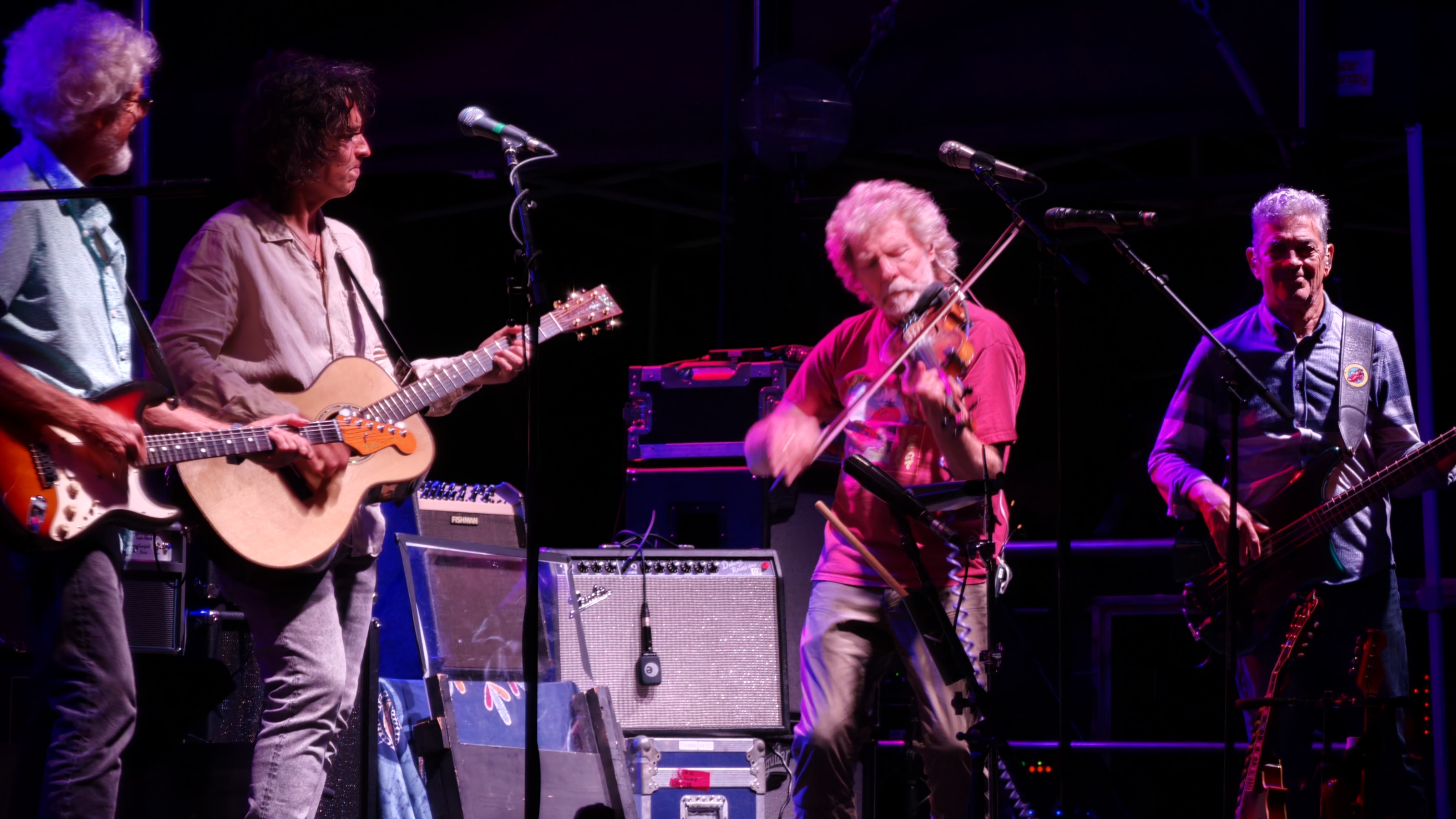
September’s annual Baygrass Music Festival at Sandy Point State Park has its own distinct rhythm: local oysters and local brews, a crowded beach, and the cascade of Béla Fleck’s banjo cutting through a salty breeze off the Chesapeake. Pair that with standout sets from Little Feat and Sam Bush, and you’ve got a first-rate roots music festival. But Baygrass operates with a deliberate mission baked directly into its organizing slogan: “Every Jam Heals the Bay.”
Festival CEO Ron Peremel describes the model as an “immersive education experience rather than a lecture.” It’s a sharp distinction. Haranguing people about nutrient runoff rarely changes minds; embedding conservation directly into a water’s-edge weekend festival actually does. You don’t need doomsday dogma when you can make estuarine ecology tangible, visible, engaging, and just plain fun.
That approach defined the Bay Guardian Village, the festival’s dedicated conservation hub. The lineup brought together a formidable regional cohort: the Oyster Recovery Partnership, presenting reef restoration and shell recycling; the Alliance for the Chesapeake Bay, unpacking stormwater remediation and agricultural best practices; the Watershed Stewards Academy; the Severn River Association; the Ocean Conservancy; and even NASA Goddard’s Hydrological Sciences Program, translating satellite Earth observation down to the dynamics of local tidal creeks.
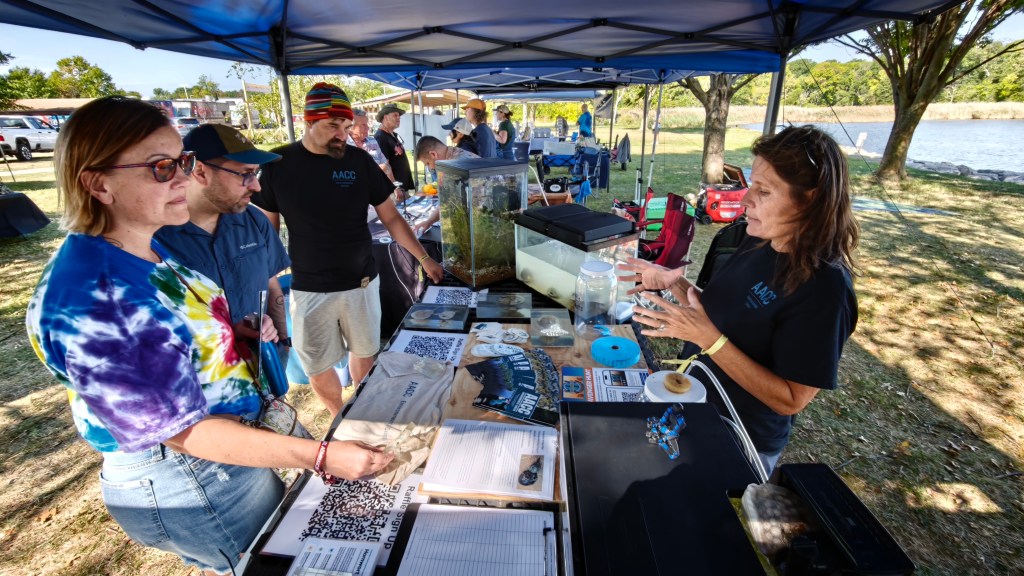
Positioned square in the middle of that village was the Anne Arundel Community College (AACC) Environmental Center. Rather than leaning on dry handouts, Center staff and students built a working field lab right on the grass.
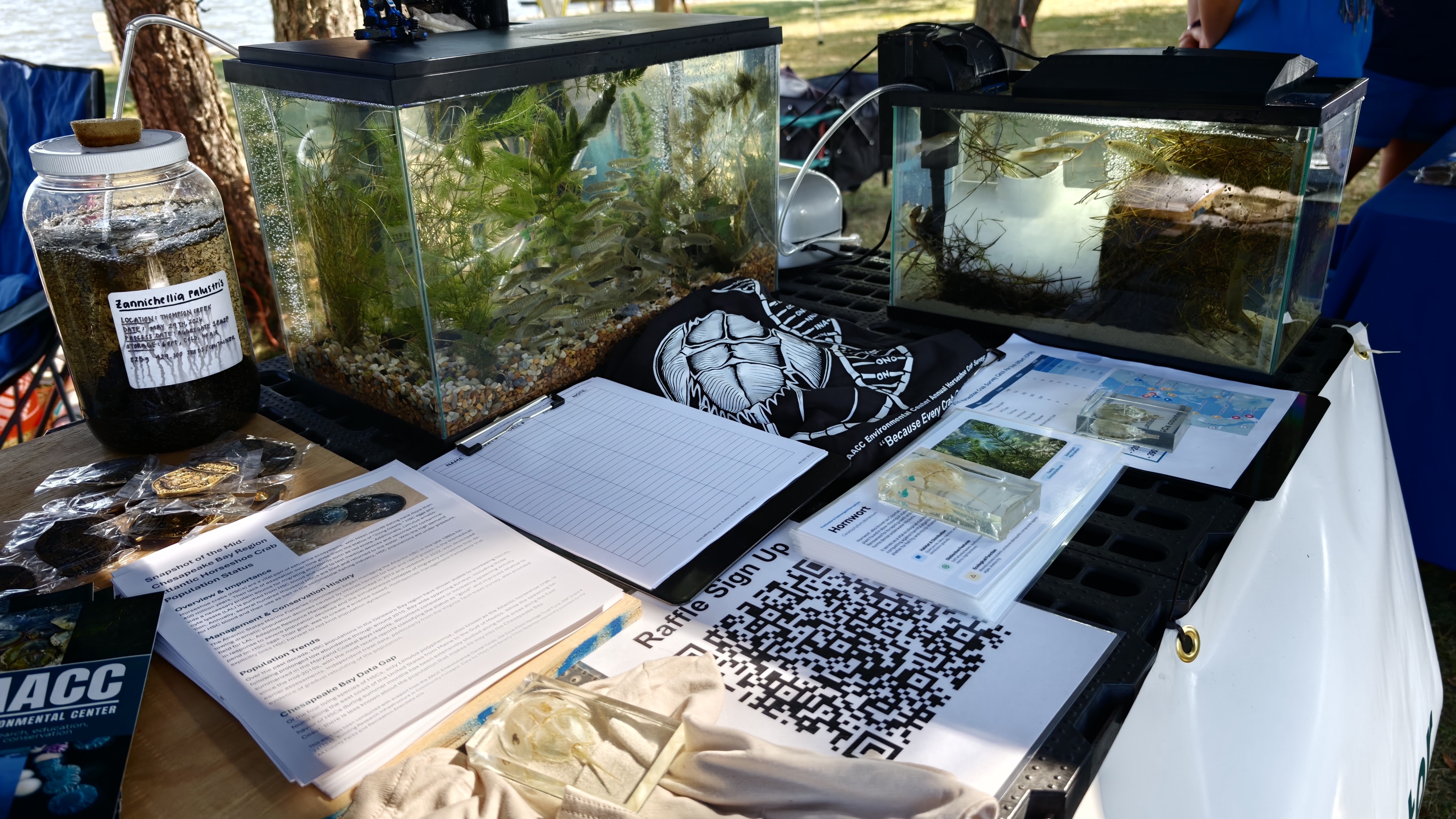
They anchored the space with four tabletop aquariums, giving visitors an eye-level look at native estuarine species and submerged aquatic vegetation (SAV) — the original “bay grass” — those unglamorous underwater forests that do the heavy lifting of Bay filtration and nursery habitat. Beside the tanks, a monitor looped unvarnished field footage of AACC students hip-deep in tidal muck: pulling water samples, tagging horseshoe crabs, and planting bay grass. Throughout the weekend, Center staff engaged festivalgoers one-on-one, demystifying Operation Clearwater’s bacterial testing and explaining how routine creek monitoring translates directly into public health advisories and swimming safety.
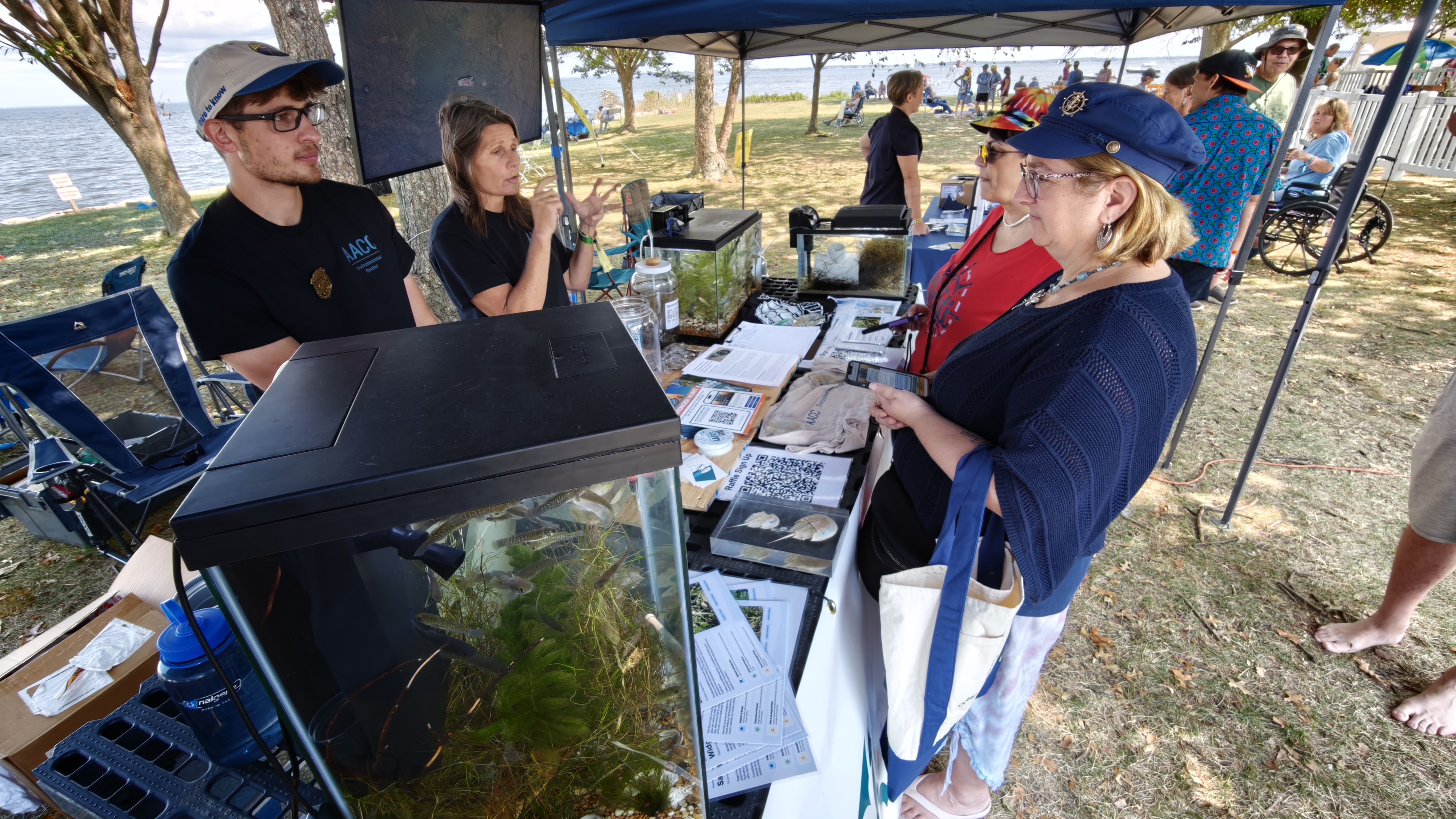
Applied science doesn’t require pious marketing; it requires solid fieldwork, visible mechanics, and unpretentious public education. By taking academic research out of the lab and dropping it onto the festival lawn, the AACC Environmental Center proved just how engaging hands-on stewardship can be when people connect over a shared love of nature and of our amazing estuary.
And Béla Fleck!

