
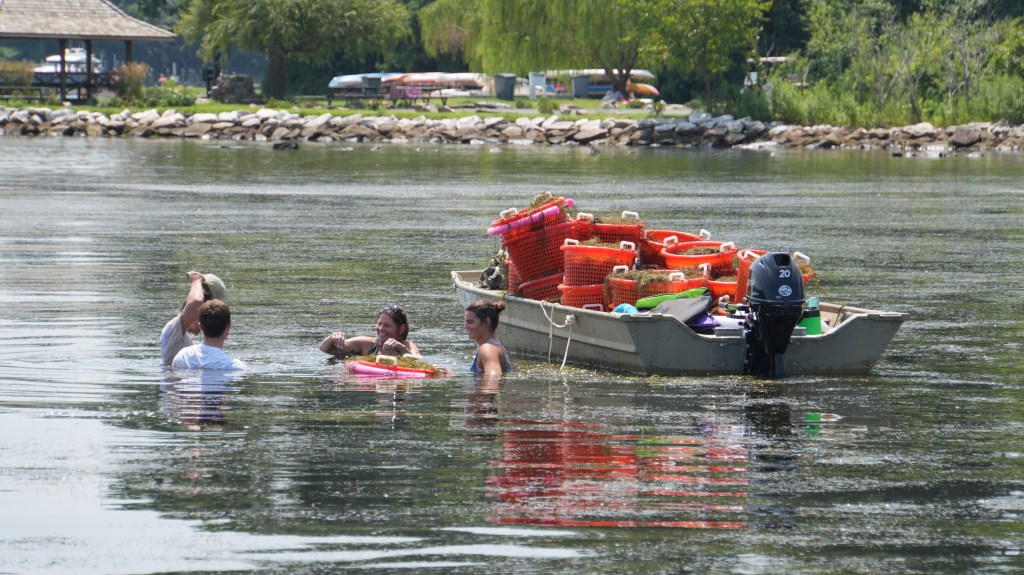
In 2025, the Denker Foundation is excited to underwrite a multi-year longitudinal study — the first of its kind — to research best practices for the harvesting, processing and dissemination of submerged aquatic vegetation (SAV) in the Chesapeake Bay. This original research is being performed by the Environmental Center at Anne Arundel Community College.
SAV plays a keystone role in Chesapeake water quality, oxygenating the water, reducing CO2, filtering sediment, mitigating wave action and erosion and providing habitat for crabs and fish. For decades, research scientists at the Environmental Center have worked with the Maryland Department of Natural Resources and conservancies like the Arundel Rivers Federation to harvest seed from wild SAV and replant it the following year. In 2024, Maryland Public Television produced an award-winning episode about this Bay-wide activity: “Ribbons in the Tide.”

No one, however, has done a scientific longitudinal study of best practices for this activity: where and what species to harvest, how to most efficiently process and store the seeds, and what conditions (e.g. depth, substrate, sunlight, wave action) make for ideal replanting sites. This study does that in four phases.
Phase one establishes a baseline of conditions at proposed planting sites through weekly observations of water properties, sunlight, depth, soil and wave action prior to any intervention.

Phase two is the seed harvest, which occurs each year at various times and locations based on the SAV species being collected. This multiparty event involves the participation of students, faculty, partner river conservancies and oversight by the DNR.

Harvesting requires collecting plant matter with as much properly ripened seed as possible.
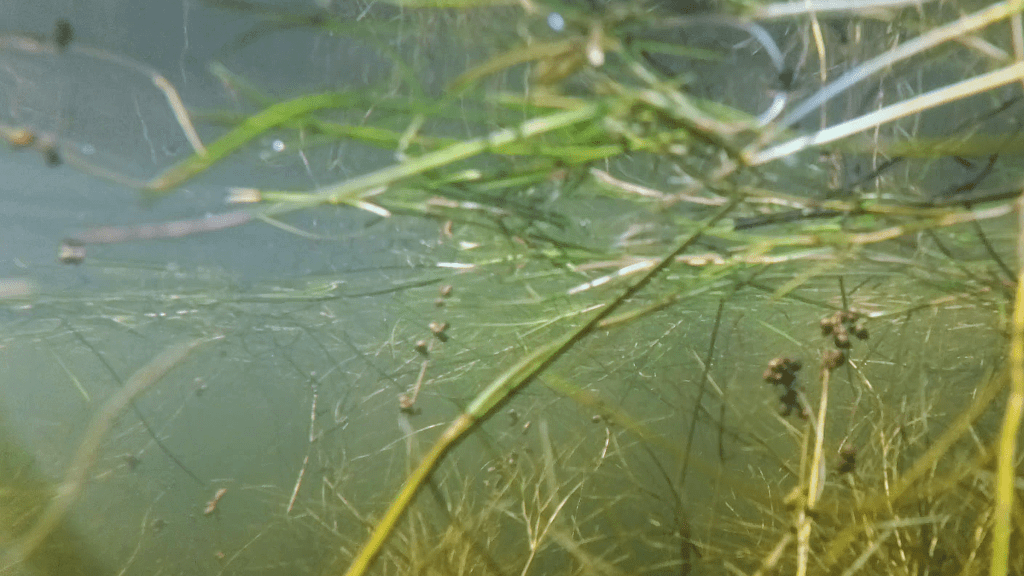
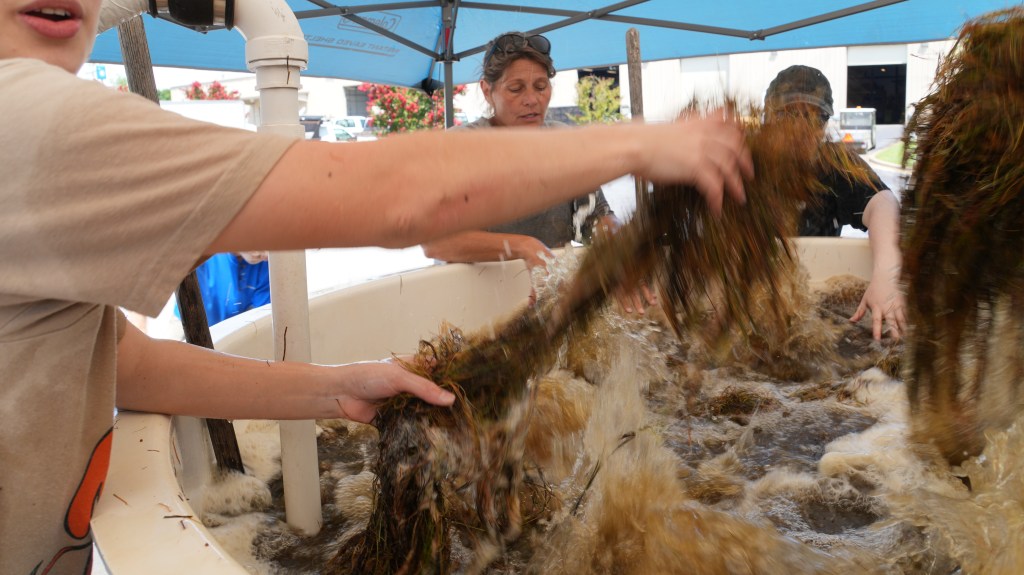
Phase three is seed processing — a complex and labor-intensive procedure involving custom-engineered equipment developed over decades of experience. After a short decomposition stage, which weakens the bonds between the seeds and plant, everything is loaded into turbulators, which agitate the SAV to separate the seeds from most of the plant matter.
But “most” isn’t enough; any plant material that remains mixed with the seeds can rot and spoil it. This necessitates further stages of sifting and cleaning.
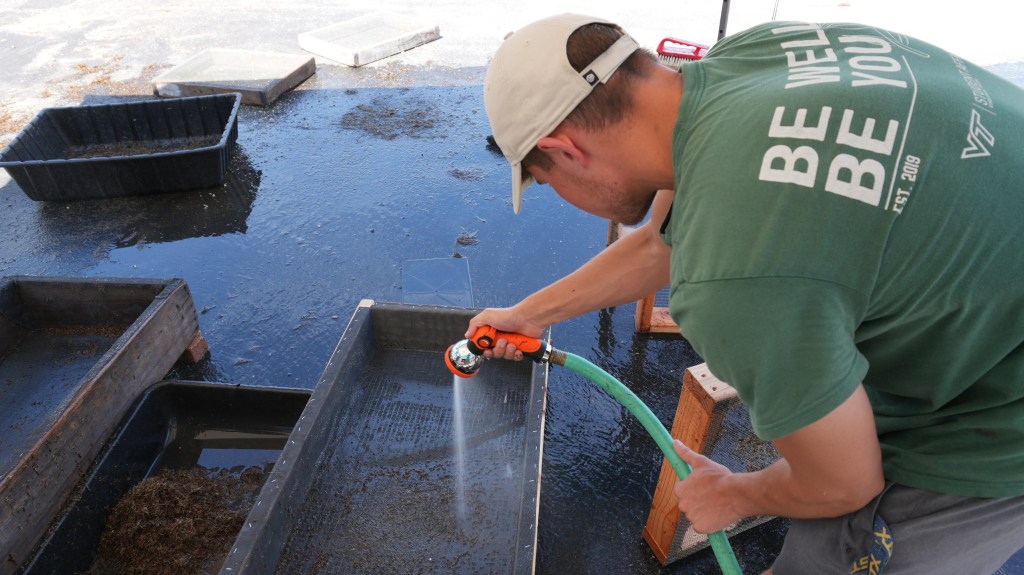
Once the seed is clean, it’s ready to be refrigerated and stored until phase four — planting — which will take place the following winter and spring.

Check back for future posts on phase four and this ongoing multi-year project.

