
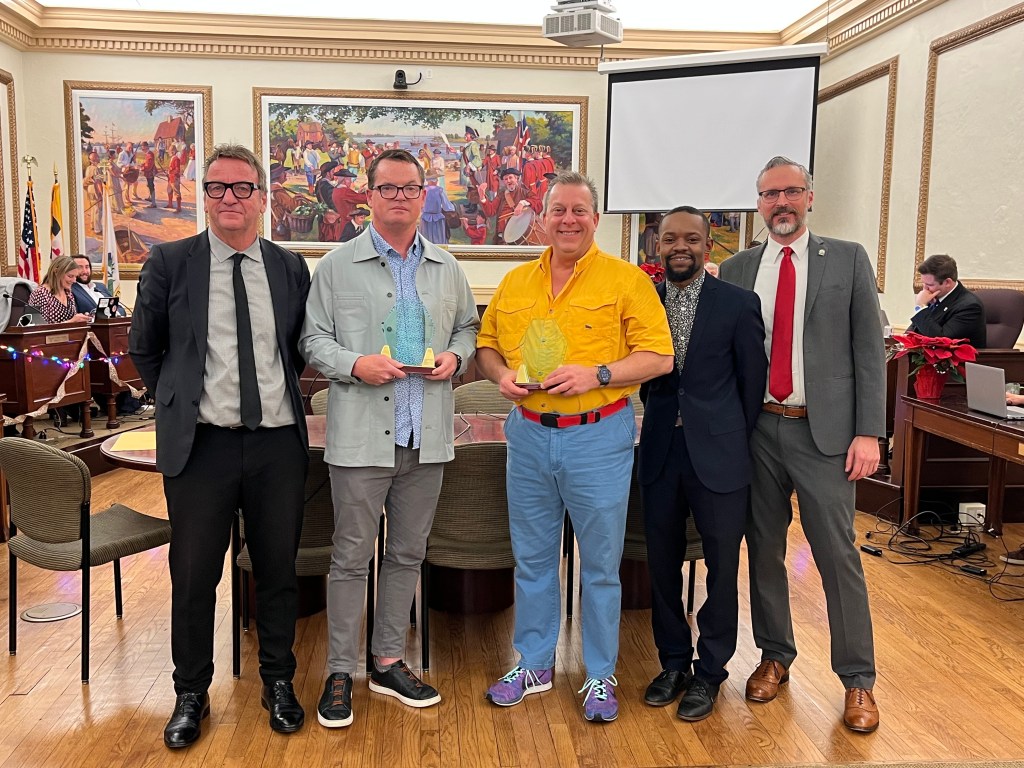
Pursuant to the Sweden study tour, Patrick Denker and Matthew Earl, directors of the Denker and MHE Foundations respectively, were honored to receive a 2024 City of Annapolis award from Mayor Gavin Buckley and the Annapolis City Council for “leadership toward a resilient and sustainable future for our community.” (Pictured left to right: Mayor Gavin Buckley, Matt, Patrick, Alderman DaJuan Gay, Alderman Rob Savidge.)
Tag: environment
-
Netherlands 2023 Resilience Study Tour
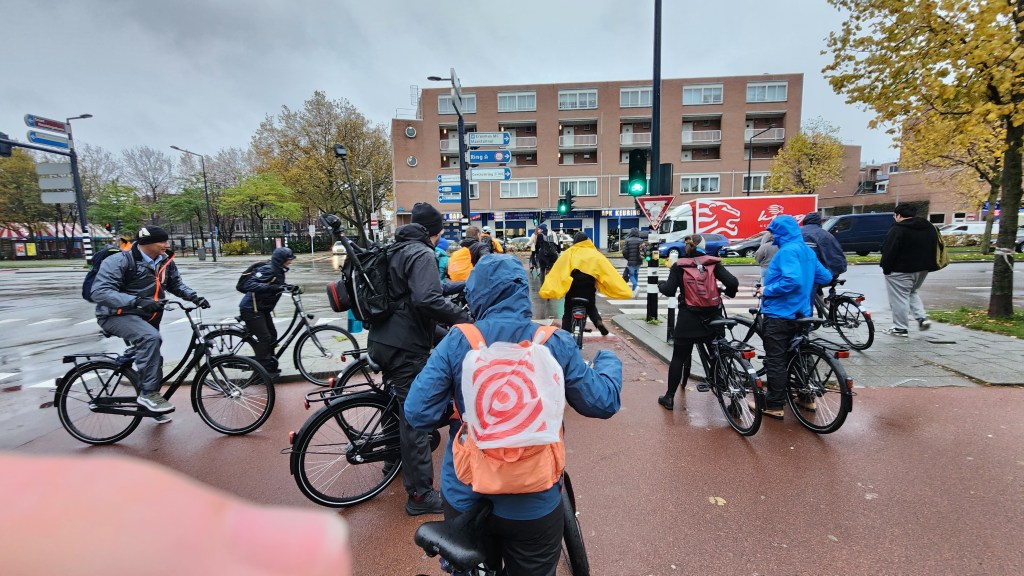
In 2023, the DF helped support the City of Annapolis’ study mission to the Netherlands to research two public-benefit topics of crucial interest to Annapolis and Maryland: biking infrastructure and flood control/prevention — topics you’d be hard-pressed to learn more about, anywhere in the world, than in the Netherlands. The delegation of 14 included Maryland Secretary of Planning Rebecca Flora, disaster risk reduction director Sara Bender, members of the City Council and others. The Dutch Cycling Embassy and the Resilience Authority of Annapolis and Anne Arundel County were instrumental in organizing and executing the tour.
And what we learned was invaluable. We cycled to all our meetings, of course — the Dutch cycle everywhere — and were able to see, in use, all the theories the Dutch have developed about best practices for cycling infrastructure.

Tanya Asman, Bicycle and Pedestrian Planner at Anne Arundel County, was with us on the tour, which gave fresh impetus to the county’s ambitious expansion of its county-wide bike trails system.
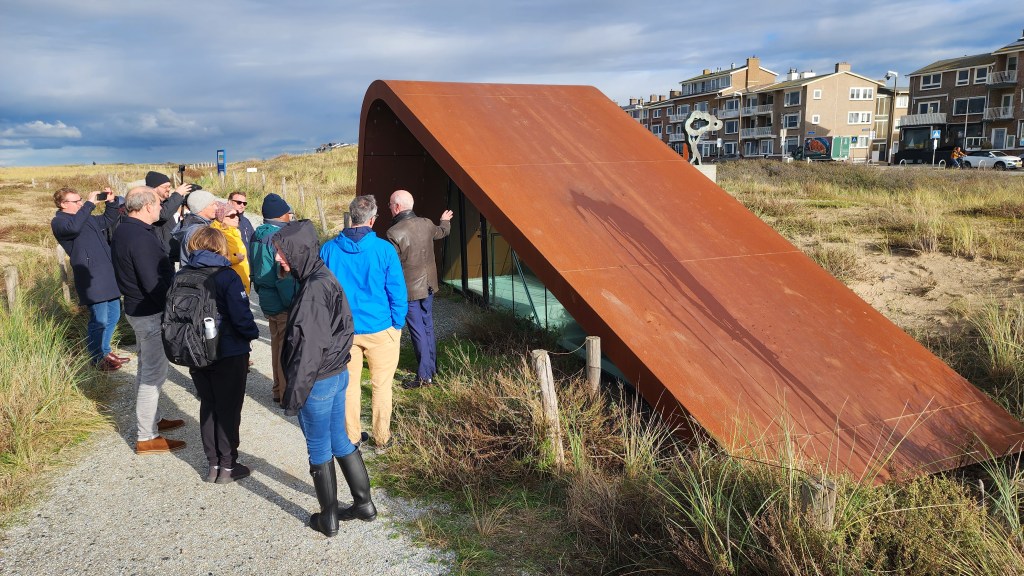
Another highlight of the tour was our visit to this incredible parking lot buried under sand dunes (reconstructed to combat sea level rise) in Katwijk an Zee. As you walk out toward the beach, you see nothing but the unspoiled landscape of sand dunes, a natural sea-level barrier, interrupted here and there by small weathered steel entrances into the 663-car parking facility buried underneath.
And of course the delegation visited countless flood mitigation and rising-sea-level prevention structures. The Netherlands has an abundance of both. On the one hand, it must combat rainfall and river flooding from continental Europe to the east. One remarkable system in Rotterdam leveraged construction of an underground parking garage, to which was added a huge stormwater storage basin.

On the other hand, there is the ever-present threat of rising sea levels. A quarter of the Netherlands — literally, “the low-lying lands” — lies below sea level, and the Dutch have been wresting their nation from the sea for thousands of years. The Dutch regional water boards are among the oldest continuously functioning democratic institutions in the world, with origins dating back to the 12th century. And flood control measures like the world-famous Maeslant Barrier are among the engineering marvels of the modern world.

Like two Eiffel towers lying on their sides, supporting giant walls that swing into the Rhine to block it, the scale of the Maeslant Barrier is impossible to convey in a photograph.
For an outstanding video summary of the mission, see here. And for the full presentation to the City Council, here.
-
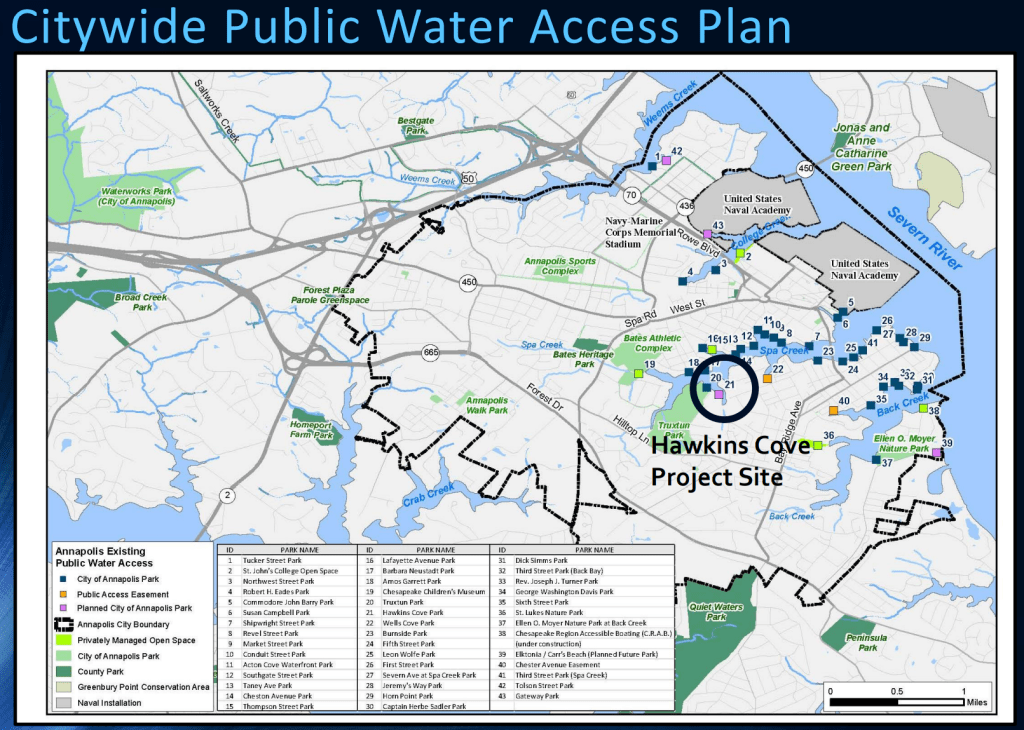
Hawkins Cove
On the south bank of Spa Creek and surrounded by condominiums and apartment buildings, Hawkins Cove hosts the highest concentration of households anywhere on Spa Creek. It’s also home to the Truxtun Park boat ramp — the most-used public boat access in the area. And it directly connects to the public housing developments of Harbor House and Eastport Terrace. As such, it’s one of the only areas in the city where underserved communities have direct access to the water.
Despite all that, Hawkins Cove and its pristine wild watershed is the most densely-wooded area on this busy urban creek. It’s home to beavers and deer, herons and owls, foxes and osprey. It wasn’t always like that. In 2018, the Spa Creek Conservancy completed a multimillion-dollar major restoration of the watershed, installing runoff barriers, collection pools and replanting the entire area.
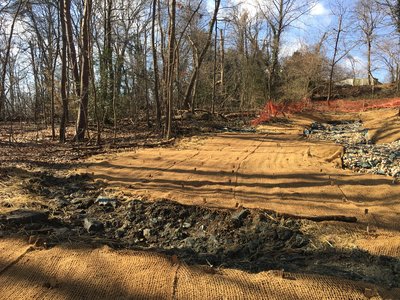
It was a tremendous success: the Hawkins Cove watershed is now a dense riparian forest. While this project ended decades of unimpeded silt and urban pollutant runoff into Spa Creek, work remained: a failing bulkhead, a collapsing public dock, a fallow waterfront plot and the silting in of the cove, choking out SAV and creating a mud flat where boats had once docked, all on city-owned land.
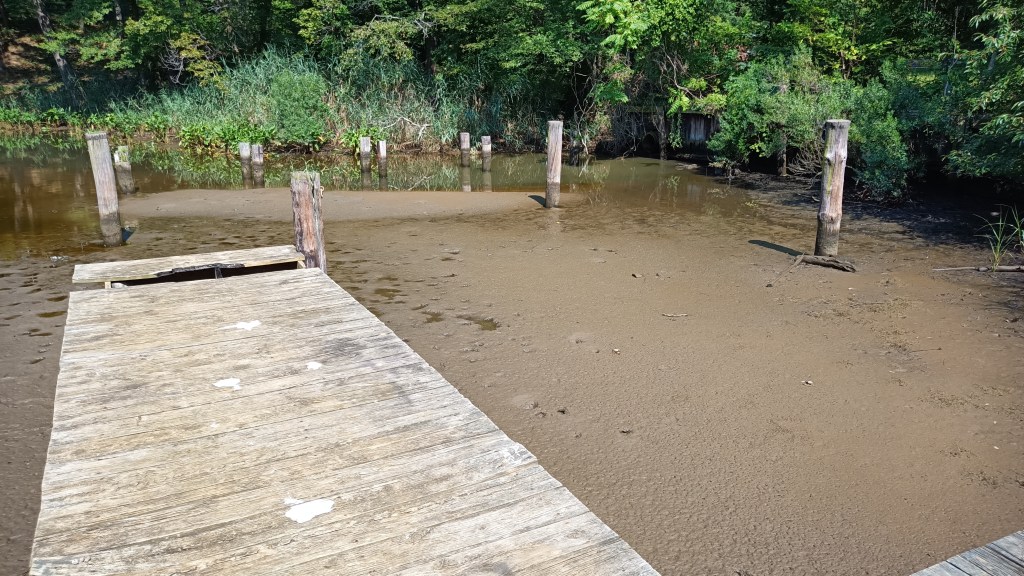
In 2021, the City of Annapolis, with support from the SCC and DF, began the next phase of restoration at Hawkins Cove. Public meetings were held, an RFP issued and, in 2024, the local maritime engineering firm of BayLand Consultants presented a 4-phase plan to replace the failing bulkhead with a living shoreline, to improve stormwater management, to create a waterfront city park with kayaking and fishing access, and to mitigate some of the 10′ of silt that has filled the cove since the 1960s.
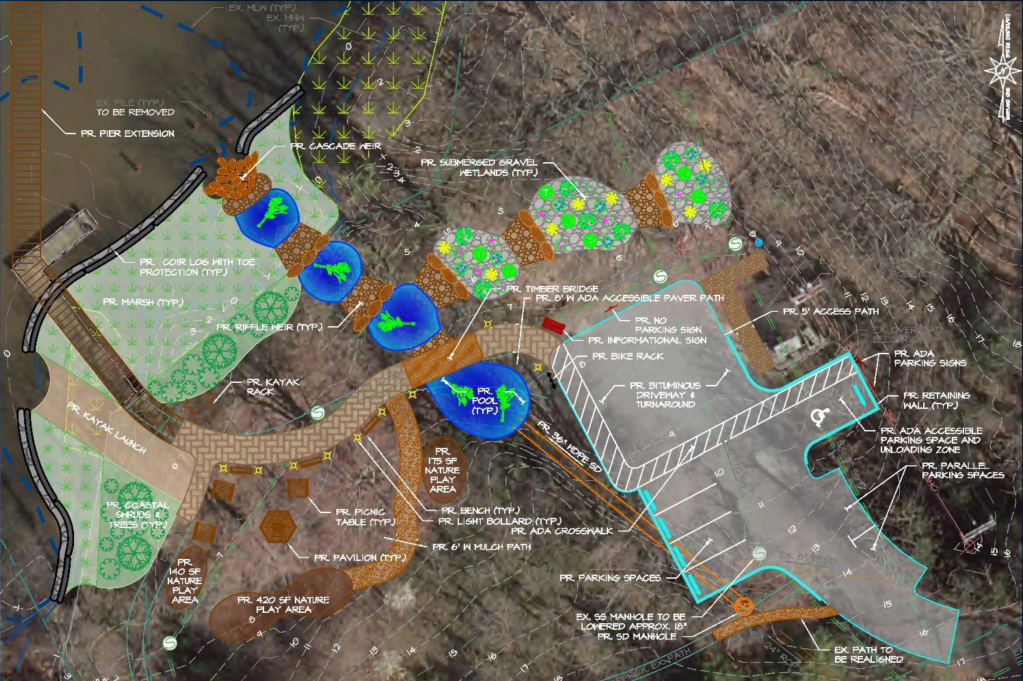
The project is underway. For developments, see the city’s page for the project:
-
Water testing
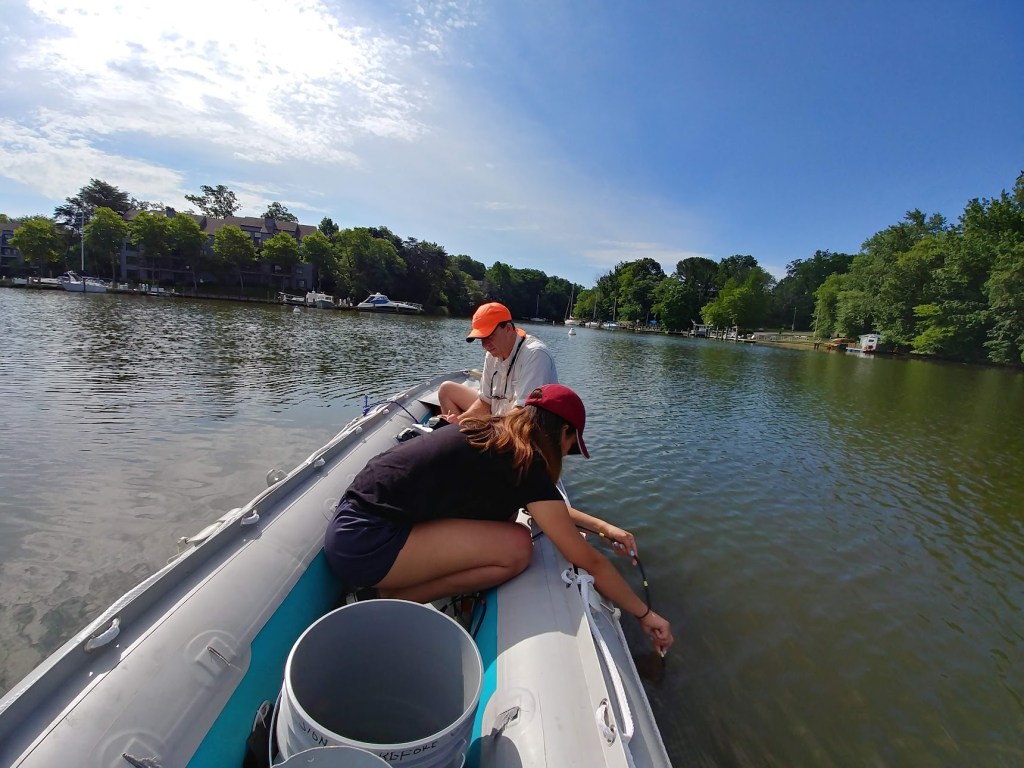
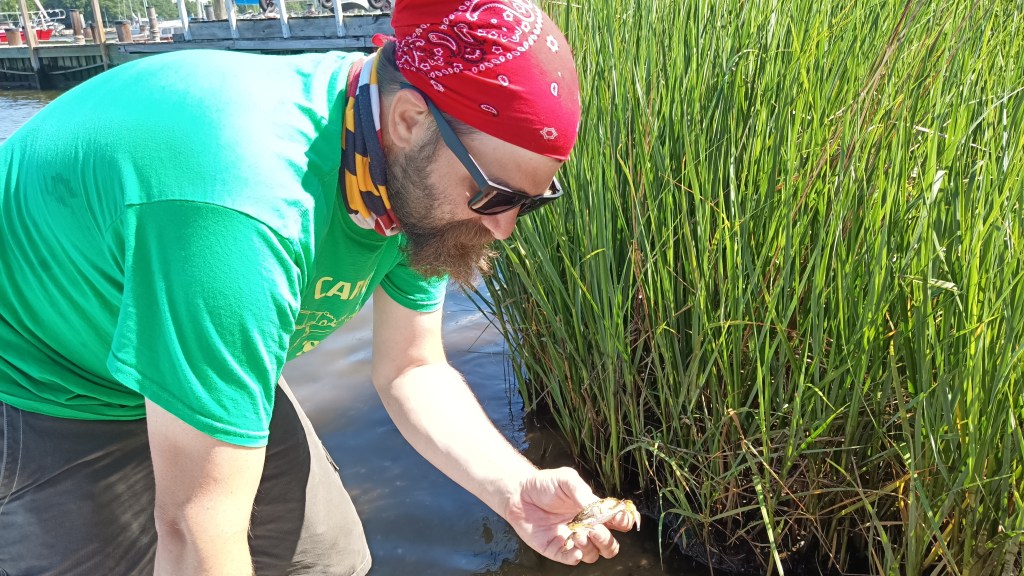
The Denker Foundation began working with the Spa Creek Conservancy in 2019. The DF supports SCC by both grants and volunteer work, assisting marine biologists from Anne Arundel Community College to gather and test water samples on Annapolis’ Spa and Back Creeks every year. Water sampling involves measuring water temperature, salinity, suspended solids, pH, dissolved oxygen, and bacteria levels. Suspended solids, for example, indicate how far sunlight can penetrate into water, thereby permitting the growth of submerged aquatic vegetation (SAV). Oxygen indicates the presence of SAV and is crucial for sustaining aquatic life. Bacteria levels determine whether water is safe to swim in.

Conservancies and riverkeepers all around the Chesapeake have been taking water samples to monitor Chesapeake Bay water health for many years. SCC has been water testing on Spa Creek for many years. Water samples are processed in the Marine laboratory at AACC and results are published to the general public.
The DF supports Spa Creek Conservancy in other ways. For more information, click here.
 The Denker Foundation