
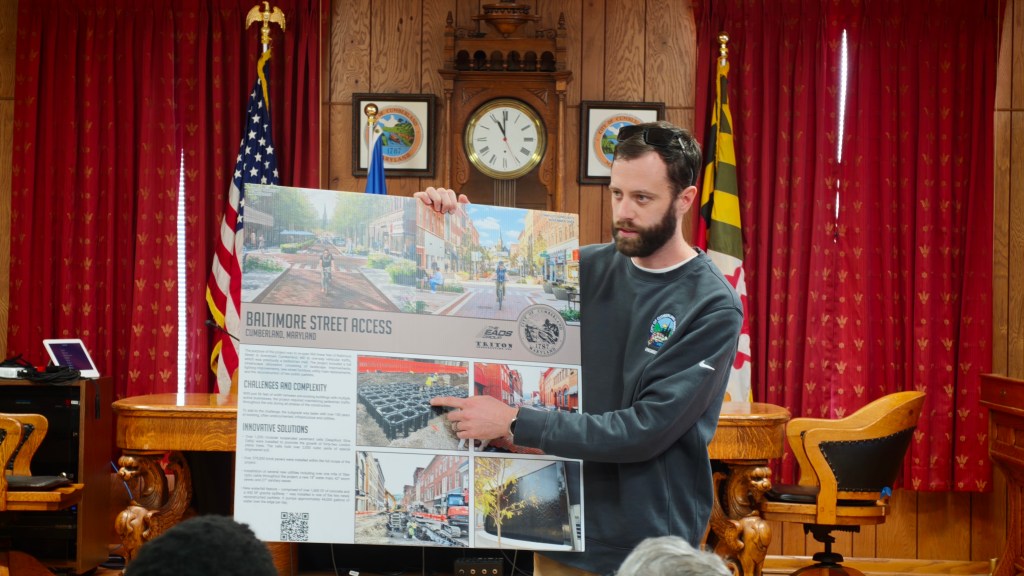
On a brisk November morning, a delegation of Annapolis officials and city council members traveled to Cumberland, MD to examine its newly redeveloped Baltimore Street corridor, led by Annapolis Economic Development Manager Adam Strott.
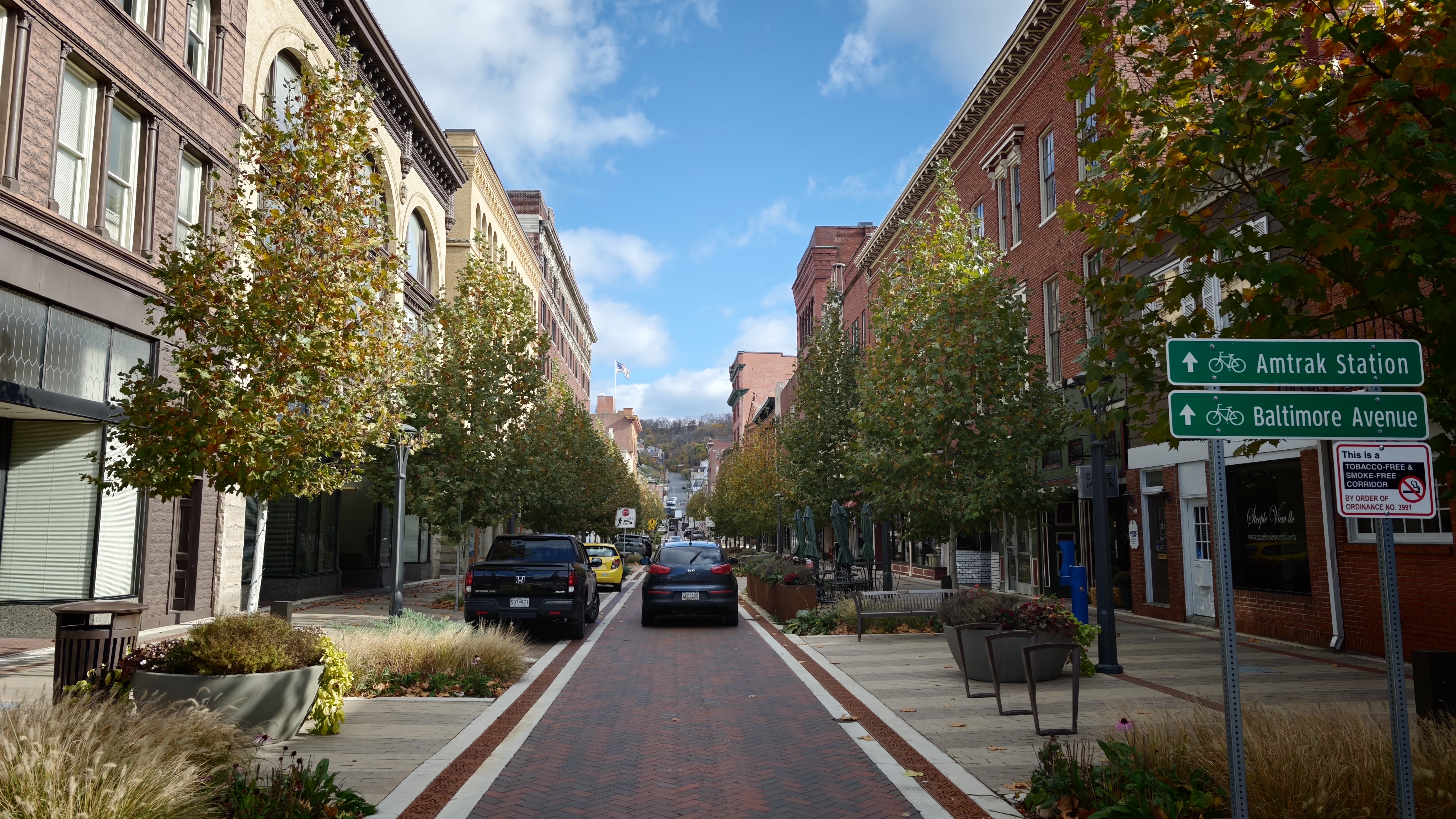
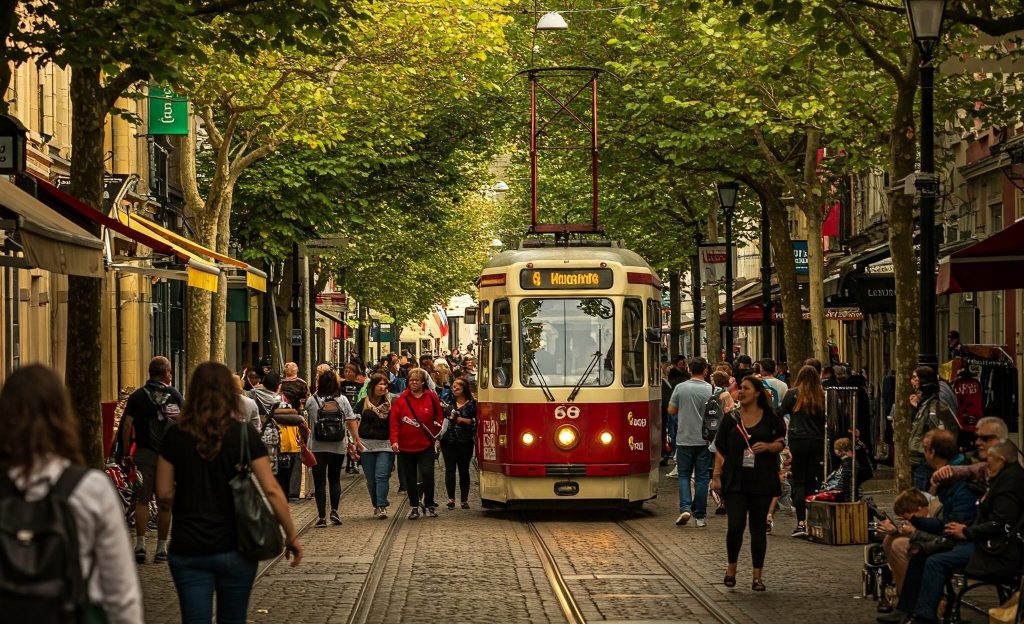
The corridor looks terrific, and the economic turnaround it has sparked is celebrated by dozens of local business owners. The basic concept for the street plan is a “woonerf” — a Dutch urban-planning term meaning “shared space” — a curbless street where reduced car traffic or public transit shares space with pedestrians. (The main shopping boulevard in Seville is a perfect example of this, where the streetcar clangs merrily through crowds of milling tourists. Also New Orleans.)
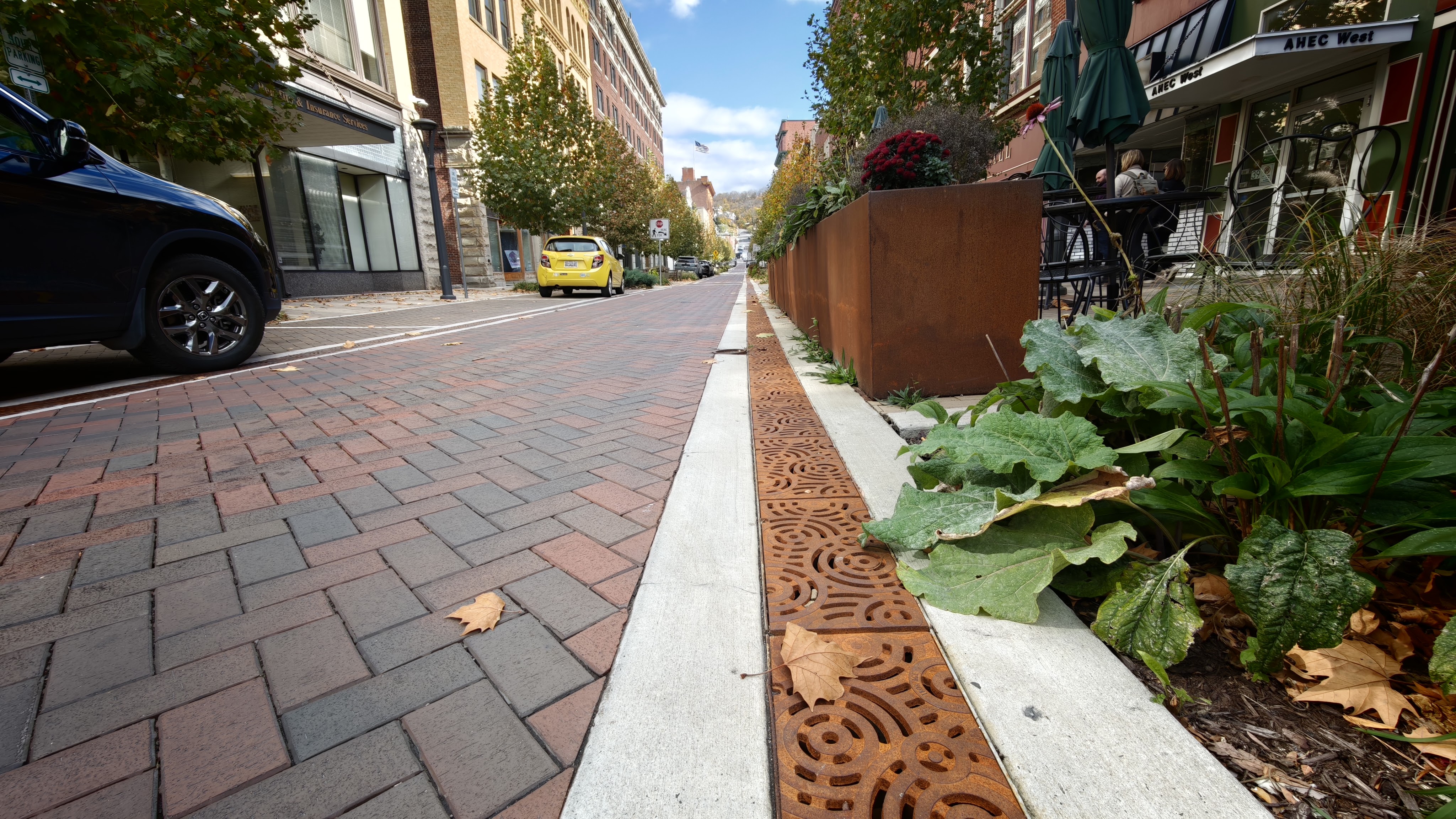
Before laying a single brick of its new curbless “festival” street, Cumberland did the unglamorous work below grade—bringing high-capacity water, fire suppression, and fiber directly to the buildings along the street. That public groundwork gave private investors the ability to redevelop long-vacant upper floors and storefronts, from the historic Rosenbaum Building to local anchors like Lilly Books.
Cumberland is a valuable test case for both full and partial pedestrianization. The headline today in Cumberland is that full pedestrianization (a bold vision implemented in the 1970s) didn’t work here, and partial pedestrianization has. But we shouldn’t jump to conclusions about how Cumberland’s experience translates to Annapolis, which is 1) a larger city with 2) heavier visitor foot traffic and 3) a shorter Main Street. And when you factor in a streetcar on a pedestrianized route, the calculus changes completely.
Cumberland makes one thing crystal clear: smart urban redevelopment in historic Maryland small cities revitalizes the city center, improves the quality of life for residents and visitors, and generates new revenue for the city. Visit Cumberland! It’s a gem.

